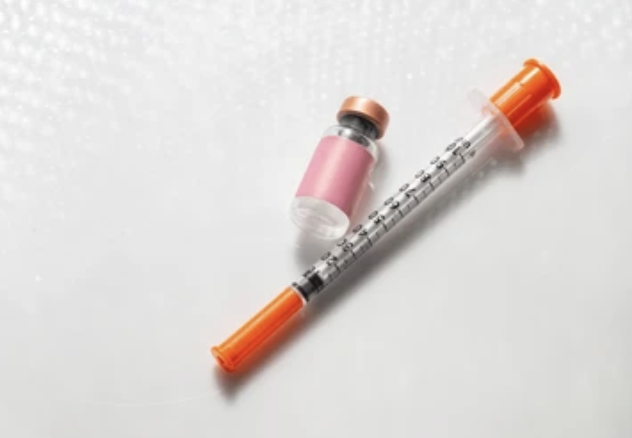
What to know before starting a GLP-1: the medication manages your appetite while you take it, and nothing after. One year after stopping semaglutide, participants in the STEP 1 trial regained two-thirds of the weight they had lost. The muscle you build and the protein habits you set while you are on it are what hold your results in place.
GLP-1s work. I’m not here to debate that. They quiet appetite, they steady blood sugar, and for a lot of women they are the first thing that has made eating less feel possible instead of like a fight she loses by 4pm.
The medication is the window. And windows close.
Whether a GLP-1 belongs in your body is a conversation between you and your prescribing provider, not me. I’m a certified health coach, and that line matters. What I can tell you is what happens on the other side of it, because across more than 10,000 clients, most of them women in perimenopause, that is the part almost nobody plans for until they are standing in it.
The medication does its job
These medications reduce appetite and improve glucose regulation, and the trial data is strong. A 2025 joint clinical advisory from four leading nutrition and obesity organizations, published in the American Journal of Clinical Nutrition, put the trial range at 5 to 18 percent of body weight, with lower numbers in real-world use.
What the medication does not decide is where that weight comes off. Your protein, your training, and your sleep decide whether the scale drop is fat or something you will want back later.
The belief I run into constantly, usually around month three when a woman is feeling great, is that a smaller appetite means a smaller need. Appetite suppression is not a signal that your body requires less protein, less fiber, or fewer micronutrients. Hunger got turned down. Your requirements did not move.
The window closes sooner than most women expect
In a cohort study of 125,474 US adults who started a GLP-1 for overweight or obesity, 64.8 percent of those without type 2 diabetes had stopped within a year. Cost, coverage denials, side effects, supply, or simply reaching a number on the scale and deciding they were done.
The STEP 1 trial extension followed people after they came off. One year after withdrawal of semaglutide and the structured lifestyle support that came with it, participants had regained two-thirds of their prior weight loss, with cardiometabolic markers drifting back toward baseline alongside the weight.
That is not a character flaw. That is biology doing what biology does when appetite returns to a body with nothing new holding the line, which is why your plan for coming off has to exist long before the week your prescription runs out.
The medication lends you a smaller appetite. Muscle is what keeps the results after you give it back.
The number nobody prints on the box
This is the part I care most about for my women, and it gets left out of every before-and-after on the internet.
When weight comes off fast, some of it is muscle. A 2024 review in Diabetes, Obesity and Metabolism pulled the body composition data out of the registration trials and found that in STEP 1, the fraction of weight lost from lean mass was 45.2 percent. Tirzepatide came in lower, around 25 percent.
Now stack that on top of where my clients already are. Across the menopause transition, lean mass is already falling, with perimenopausal women showing roughly 2.5 percent less lean mass and postmenopausal women 5.7 percent less compared with premenopausal women. Estrogen is one of the things holding muscle in place, & as it declines, muscle protein breakdown climbs while the response to food and training softens.
So the average woman I work with, 43 years old, is not starting from neutral. She is starting from a body that has been giving up muscle for years, and she’s about to enter a rapid loss phase where a real share of what leaves could be more of it.
That’s why the scale is the worst tool you own for judging whether this is going well. It will tell you the number is down, and nothing about what left.
What I tell my clients to do while they’re on it
Three things, and they are the same three whether you are on a medication or not. The medication just makes them easier to execute.
Protein at every meal, tracked, not guessed. The research on preserving lean mass through GLP-1 treatment points toward protein intake above 1.2 grams per kilogram of body weight per day, spread evenly across meals, paired with structured resistance training. Your individual target depends on your body, your training, and your goals, which is exactly the number I set with clients.
Strength training on the calendar, in week one. Not when you feel ready, not once the scale starts moving. The same research pairs adequate protein with structured resistance training for a reason, and one without the other leaves results on the table.
Eating on purpose when hunger is gone. Skipping meals all day because you forgot to eat, living on coffee and a handful of almonds, going low-carb by accident and removing all your fiber in the process. Those are the patterns that turn a good tool into a rough six months.
The daily version of all of this, the protein math, the minimum movement plan, hydration, and how to handle the side effects most women just put up with, is in my free GLP-1 Guide. You can grab it here!
The off-ramp is a skill, not an event
Stopping abruptly with no support in place is the highest-risk version of this. The same advisory recommends that everyone using these medications be offered intensive, multicomponent behavioral support for the loss phase and the maintenance phase both. When structured nutrition guidance is paired with the medication, people lose more, stay with it longer, and hold onto results better after they discontinue.
The support is not a nice extra sitting next to the prescription. It’s the variable that decides what happens after.
Most women are doing the off-ramp alone. That’s the part I’d change.
Getting started: three things worth doing in month one
If you are about to begin, or you are a few doses in already, this is where I’d put your attention.
Get a baseline body composition scan. An InBody or DEXA at the start, then again in twelve to sixteen weeks, tells you whether you are losing fat or losing muscle. Your bathroom scale cannot, and by the time the difference shows up in the mirror you’ve lost months you can’t get back.
Set your protein target before your appetite disappears. Building the habit while eating is still comfortable beats building it at week eight, when nothing sounds good and half the day has gone by without a real meal.
Decide now who is coaching you through the exit. The step-down is where results are won or lost, and almost nobody has a plan for it. Line it up early.
Ready to build the part the medication can’t
The women who hold onto their results used the time on the medication to build protein habits and muscle, with someone in their corner while they did it.
Start with tmy free GLP-1 Guide. It covers the daily checklist, the protein and hydration targets, the movement minimums, side effect management, and how to think about the transition off. Download it here!
If you want the custom version, with your own macro targets, daily strength workouts built for a woman in perimenopause, meal guidance, and direct access to me while you do it, that’s what happens inside my membership. I would love to have you. Come join us here!


LEAVE A COMMENT
Comments