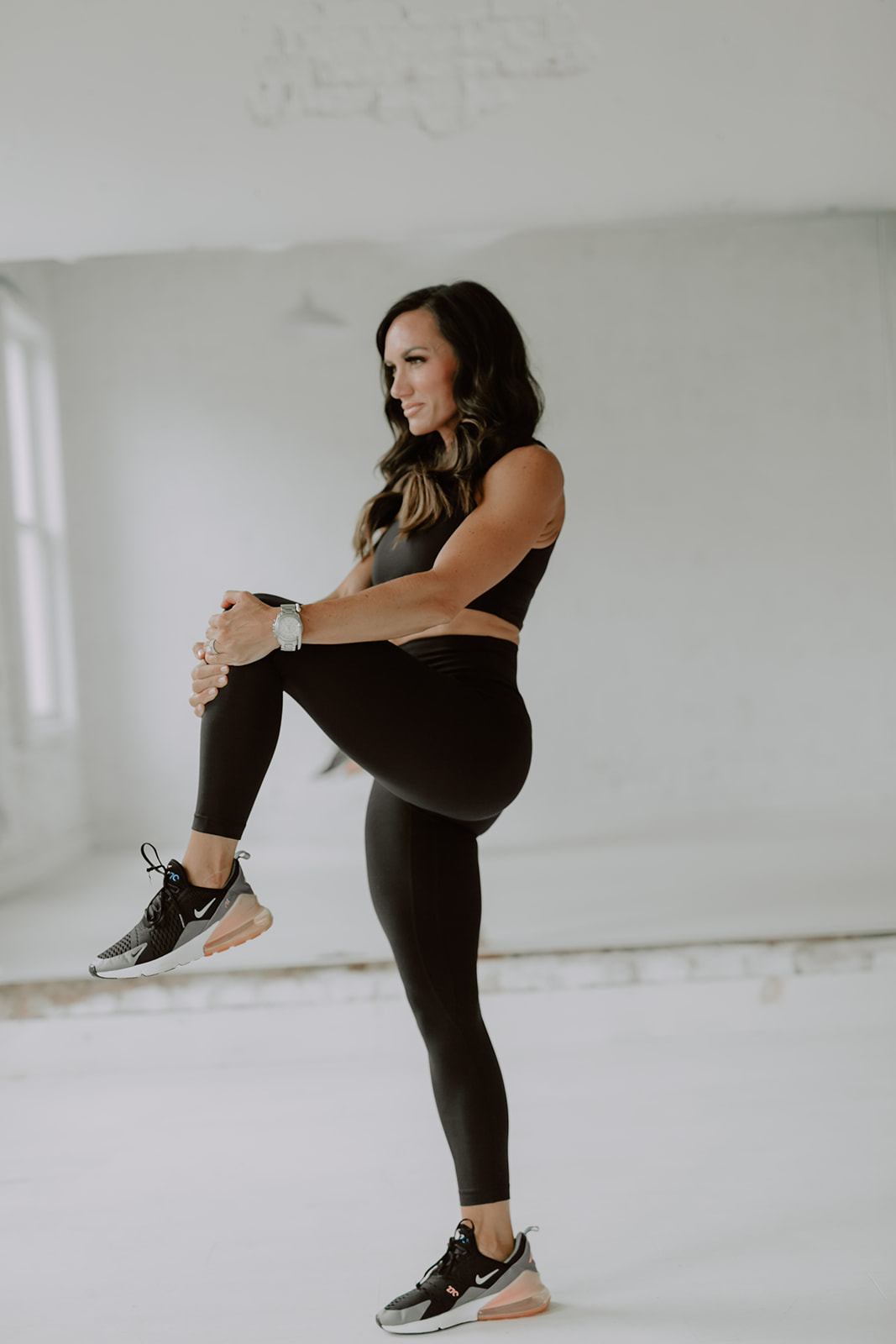
Preventing injuries in perimenopause comes down to building muscle and protecting your connective tissue as estrogen drops. Strength train with weight that climbs slowly, eat enough protein and fuel around your workouts, warm the joint before you load it, and treat sleep and recovery as part of the plan. You stay safe by training smarter, not by stopping.
The workout that never used to bother you is starting to bother you, and it is not because you are getting old and fragile.
For years you could add weight, run the extra mile, skip the warm up, and your body just absorbed it. Then somewhere around 43 your shoulder starts talking back, your low back tightens up, and a tweak that used to fade in a day hangs around for a week.
Yes, your hormones are part of this. That part is real. The answer is not to baby yourself out of the gym, it is to understand what changed and train with it.
Why Injuries Sneak Up on You in Perimenopause
Estrogen does a lot more than run your cycle. It helps your body build and maintain the collagen that makes up your tendons and ligaments, and it keeps those tissues supple enough to absorb load. As estrogen drops through perimenopause, collagen production slows and tendons get stiffer and less forgiving under stress, which is why a movement you have done a thousand times can suddenly leave you sore in a way that lingers.
Researchers now have a name for the whole picture: the musculoskeletal syndrome of menopause. It groups together the joint pain, the loss of muscle, the falling bone density, and the real rise in tendon and ligament injuries that show up in this window of life.
Then add muscle loss on top. Starting in your forties you lose muscle faster than you did in your twenties, and muscle is what stabilizes a joint the moment you load it. Less muscle, stiffer tendons, thinner bone. Same squat. Different body underneath it.
That is why the tweak hangs around now. Your tissue is asking for something different than it needed at 30.
The Mistake That Makes It Worse
When the scale creeps and the old workouts stop delivering, most women reach for the thing that feels productive. More cardio. Longer sessions. Heavier weight with no ramp up. Less food, because eating less has always been the answer we were sold.
Every one of those is a setup for getting hurt. Under-fueled, under-recovered tissue does not repair the way rested, fed tissue does. Skipping the warm up loads a cold, stiff tendon before it is ready. Pushing through sharp pain turns a small irritation into a real injury that sidelines you for months.
You are not doing this out of laziness or a lack of effort. You are doing more of what used to work, in a body that needs a different input now.
Your body is not broken. The strategy you were handed is.
Strength Training Is the Protection, Not the Risk
The fear is that lifting heavier will be the thing that finally hurts you. The research points the other way. In the LIFTMOR trial, postmenopausal women with low bone mass did supervised, progressive heavy resistance training twice a week for about half an hour, and it was safe, well tolerated, and it improved both their bone density and their physical function. These were women who had been told for years to stay light and be careful.
Progressive strength training is what rebuilds the muscle and bone that protect your joints. Done right, with weight that climbs slowly and form that holds, it is the most protective thing you can do for a midlife body, not the risky one.
My client Susan proved this at nearly 60. She has Hashimoto’s, systemic arthritis in multiple joints, and osteoarthritis, and she had been athletic right up until arthritis took hold in her forties. With nutrition that supported her and a strength plan she could trust, she told me the workouts gave her more confidence to push her body than she thought was possible. Her words: “I really didn’t think at the age of 60 I would be in the shape I am now.” Not in spite of the arthritis. With a plan built around it.
How to Train So You Don’t Get Hurt
This is not complicated, and it does not mean giving up the things you love. A few changes protect the joint while you keep getting stronger.
Warm the joint before you load it. Five to ten minutes of easy movement plus a couple of light warm up sets tells stiff tissue what is coming. Cold and rushed is when things tear.
Add weight slowly, on purpose. Progressive overload means small jumps your body can adapt to, not chasing a number your ego picked on a good day. Strength built gradually is strength that holds.
Fuel the repair. Your muscles and tendons rebuild on protein and on enough total food, especially around your workouts. Under-eating is one of the fastest ways to stall recovery and invite injury.
Know the difference between sore and sharp. Soreness the next day is normal. Sharp, pinching, or pain that lingers for days is a signal to back off and modify, not to push through. If something hurts in a way that worries you, loop in your doctor.
This is what showing up the smart way looks like. My client Deisy is 49 and in perimenopause, dealing with sciatica and low back pain that used to make consistent exercise feel impossible. Instead of forcing through it or quitting, she followed a structured plan she could trust and modified where she needed to. She kept going. “Dealing with hip and low back pain hasn’t been easy but I’m proud that I continue to show up everyday,” she told me. The structure is what kept her safe enough to stay consistent, and consistency is what changed her body.
Ready to Build a Body That Holds Up?
My program is built for exactly this. You get customized macros so you are fueling repair instead of fighting your body, 30-minute strength workouts with modifications for every level and every cranky joint, and me coaching you through all six weeks so you progress in a way that protects you instead of breaking you down. If you give it a real try and it turns out not to be your fit, there is a 30-day satisfaction guarantee, no hard feelings.
Join my FASTer Way membership!
I would love to have you in the program. Come build the strength that keeps you doing everything you love.
Frequently Asked Questions
Why am I getting injured more in perimenopause?
As estrogen declines, your body makes collagen more slowly, so tendons and ligaments get stiffer and less able to absorb load. At the same time you start losing muscle and bone density faster, which leaves your joints with less support. The same movements you have always done now ask more of tissue that has changed.
Should I stop lifting weights if my joints hurt in perimenopause?
Stopping is usually the wrong move, because strength training is what rebuilds the muscle and bone that protect your joints. The fix is to modify, warm up properly, and progress slowly rather than quitting. If you have sharp or lingering pain, back off that movement and check in with your doctor before pushing on.
Does strength training cause injuries in women over 40?
The research suggests the opposite when it is done well. In the LIFTMOR trial, supervised progressive heavy resistance training was safe and well tolerated in postmenopausal women with low bone mass, and it improved their bone density and physical function. Form, gradual progression, and adequate recovery are what make it protective.
What is the best way to prevent workout injuries during perimenopause?
Warm the joint with light movement before you load it, add weight in small steps instead of big jumps, fuel recovery with enough protein and total food, and protect your sleep. Training through sharp pain is the main thing to avoid. Modify the movement instead.
Can I still build muscle in perimenopause?
Yes. Building muscle in midlife takes progressive strength training, enough protein and food to support repair, and real recovery between sessions. It usually comes slower than it did in your twenties, but it absolutely still happens, and that new muscle is part of what protects you from injury.
Is joint pain in perimenopause permanent?
For many women the joint pain tracks with low estrogen and with losing strength from doing less, both of which respond to movement and a smart strength plan. Stiffness and aches often ease as you build muscle and fuel recovery. Pain that is severe, sudden, or not improving deserves a look from your healthcare provider.


LEAVE A COMMENT
Comments