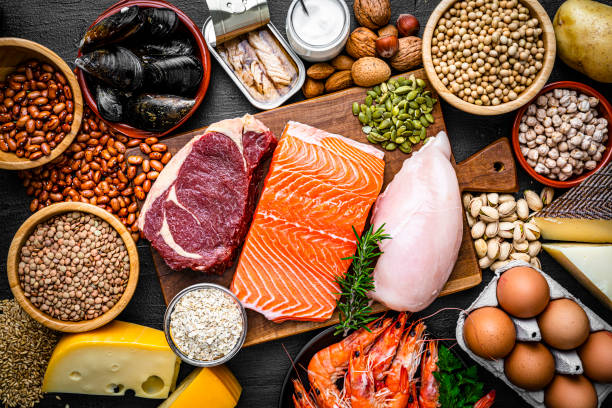
On semaglutide, your protein needs do not drop just because your appetite did. Build every meal around protein, aim for a real serving at each one, and most research points to roughly 1.2 to 1.6 grams per kilogram of body weight a day to protect muscle while you lose fat. Your exact number depends on your body and your goals.
On semaglutide, the scale drops and it feels like everything is finally working. The number is moving, your clothes are looser, and for the first time in a long time eating less does not take a fight.
But not all of that weight is fat. In studies of semaglutide, close to 40% of what people lost came from lean mass, the muscle you spent years building and the muscle that keeps your metabolism running. Lose enough of it and you end up smaller but softer, with a slower engine and a body that hands the weight right back the moment the medication stops.
That part you can do something about. And it starts with protein.
Why You Need More Protein on Semaglutide, Not Less
If I were on a GLP-1, I would not just eat less. I would eat on purpose.
Here is what is happening inside your body. The medication quiets your appetite, so your total food for the day drops, sometimes by a lot. When you are eating less overall, every bite has to carry more, and protein is the bite that matters most. It does two jobs at once. It protects the muscle your body would otherwise break down for fuel while you are losing weight, and it keeps you full and satisfied on smaller portions.
Muscle is not a vanity thing. Muscle is your metabolism. It is the tissue that burns calories while you sit still, supports your blood sugar, and decides whether the weight you lose actually stays gone. When you skip protein and live on bites, snacks, and coffee, your body protects its fat stores and gives up its muscle. That is the opposite of what you want.
So on semaglutide, protein is not optional and it is not less important because you are not hungry. It is the one thing standing between losing fat and losing the muscle that holds your results in place.
How Much Protein You Actually Need
Listen, a breakfast of two eggs is not a high protein breakfast. Two eggs give you about 12 grams. That is a snack, not an anchor.
Here is how I would think about it, in order.
First, build every meal around protein and aim for a real serving each time, somewhere around 30 grams or more, three to four times a day. A palm of chicken, a couple of scoops in a shake, a bowl of Greek yogurt with a little extra. NBC’s medical contributor recommends 20 to 30 grams of protein per meal, and that lines up with what I have watched work for years. The point is consistency across the whole day, not one big protein dump at dinner.
Second, for a daily target, most research points to roughly 1.2 to 1.6 grams of protein per kilogram of body weight to hold onto lean mass while you lose fat. That is a starting range, not a rule carved in stone, and it is meaningfully higher than the bare-minimum number you may have grown up hearing.
And this is the part the internet cannot do for you. Your exact number depends on your body, your training, your goals, and where you are in this season of life. A woman in perimenopause who is lifting three days a week and a woman who is brand new to all of this do not get the same target. That is the piece I calculate for every client with custom macros, so you are working from your number, not a guess off a calculator.
The medication quiets your appetite. Protein and muscle are what keep your results when it is gone.
Eating Enough When You Are Not Hungry
Knowing the number is the easy part. The hard part on a GLP-1 is getting it in when food sounds like the last thing you want.
This is real, and the data backs it up. A 2026 study presented at the European Congress on Obesity found that people on GLP-1s ate a critically low amount of protein and skipped meals, averaging around 54 grams a day. Not because they did not care. Because appetite was gone and nobody handed them a plan.
A few things that help when hunger is quiet or your stomach feels off:
- Eat your protein first, before you fill up on anything else, so the most important thing is in before you are satisfied.
- Keep proteins simple and easy on the stomach, the ones you can get down on a low-appetite day. Greek yogurt, cottage cheese, a protein shake, eggs, shredded rotisserie chicken.
- Eat smaller and slower, three to four times a day, instead of trying to force one large meal that sits heavy.
Add fiber and water alongside the protein to keep digestion moving, since these medications slow your gut down and constipation is common. If side effects feel severe, persistent, or scary, that is a conversation for your prescribing provider, not something to push through.
Why Protein Needs Strength Training to Work
Protein gives your body the raw material to keep muscle. Strength training is the signal that tells your body to actually use it instead of burning it for fuel.
You need both. Eat all the protein you want, and if you never give your muscles a reason to stay, your body will still let them go while the scale drops. Two to three strength sessions a week, full body, is the floor. Squat, hinge, push, pull. That is what tells your body the muscle is worth keeping.
This matters most for the day you stop. When people come off semaglutide without muscle and habits in place, research shows they regain about two-thirds of the weight they lost within a year, and nearly all of it within two. Not because they failed. Because appetite came roaring back and there was no muscle, no metabolism, and no plan to hold the line.
The medication is a window. It is the season where eating less finally feels doable. The women who keep their results are the ones who used that window to build protein habits and real strength, so the results held when the appetite came back.
How to Build a Protein-First Day on Semaglutide
You do not need to overhaul your whole life. You need a repeatable structure you can run on the days you feel great and the days you do not.
Start your day with protein, not coffee and a bite. Get 30 grams or more in at your first meal, even if it is a shake. This sets the tone and protects you from getting to 4 p.m. having eaten almost nothing.
Anchor every meal around a protein, then build the plate. Decide the protein first, add fiber from veggies, fruit, or beans, then round it out. When intake is low, protein and produce earn the plate before anything else does.
Keep go-to proteins on hand for low-appetite days. Rotisserie chicken, pre-cooked ground turkey, cottage cheese, and a protein powder you like mean you are never stuck staring at the fridge with no appetite and no plan.
Track your muscle, not just the scale. A body composition scan, an InBody or DEXA, tells you whether you are losing fat or losing muscle. The scale alone cannot tell the difference, and the difference is the whole game.
Ready to Keep the Weight You Are Losing?
The medication gave you a head start. What you build while you have it decides whether the results last.
My 6-week program is built for exactly this. You get custom macros so you know your real protein number instead of guessing, strength workouts designed to build and protect lean muscle, simple meal guidance that makes protein-first eating feel automatic, and a coach in your corner the whole way. If it is not the right fit, you have a 30-day satisfaction guarantee, so you can give it a real shot with confidence.
You have already done the hard part of starting. Let’s make sure it sticks.
xo, Loren
Frequently Asked Questions
How much protein should I eat on semaglutide?
Build every meal around protein and aim for a real serving, around 30 grams or more, three to four times a day. For a daily target, most research points to roughly 1.2 to 1.6 grams per kilogram of body weight to protect muscle while losing fat. Your exact number depends on your body, your training, and your goals.
Do I need more protein on Ozempic or Wegovy than I did before?
Your protein needs do not drop just because your appetite did. If anything, hitting your protein gets harder on a GLP-1 because you are eating less overall, so you have to be more intentional about getting it in. A 2026 study found people on GLP-1s averaged critically low protein, around 54 grams a day, which is well under what protects muscle.
Why am I losing muscle on semaglutide?
Some of the weight lost on semaglutide is fat, but a large share can be lean mass. Studies have found up to about 40% of the weight lost on the medication can come from muscle, especially without enough protein and strength training. That muscle loss is what slows your metabolism and makes regain more likely.
What should I eat if I have no appetite on semaglutide?
Lead with protein you can stomach on a low-appetite day, like a protein shake, Greek yogurt, cottage cheese, eggs, or shredded chicken. Eat smaller, slower meals three to four times a day instead of forcing one big one. Pair protein with fiber and water to keep digestion moving.
Will I gain the weight back when I stop semaglutide?
Without muscle and habits in place, regain is common. Research on people who stopped semaglutide found they regained about two-thirds of their lost weight within a year. The women who keep their results use their time on the medication to build protein habits and strength, so the foundation holds when appetite returns.
Do I really need a coach to figure out my protein on semaglutide?
You can start with a general range on your own. The reason a coach helps is that your real number depends on your body, your training, and your goals, and your protein only protects muscle if it is paired with the right strength work and a plan for coming off the medication. That is what custom macros and structured coaching are for.


LEAVE A COMMENT
Comments