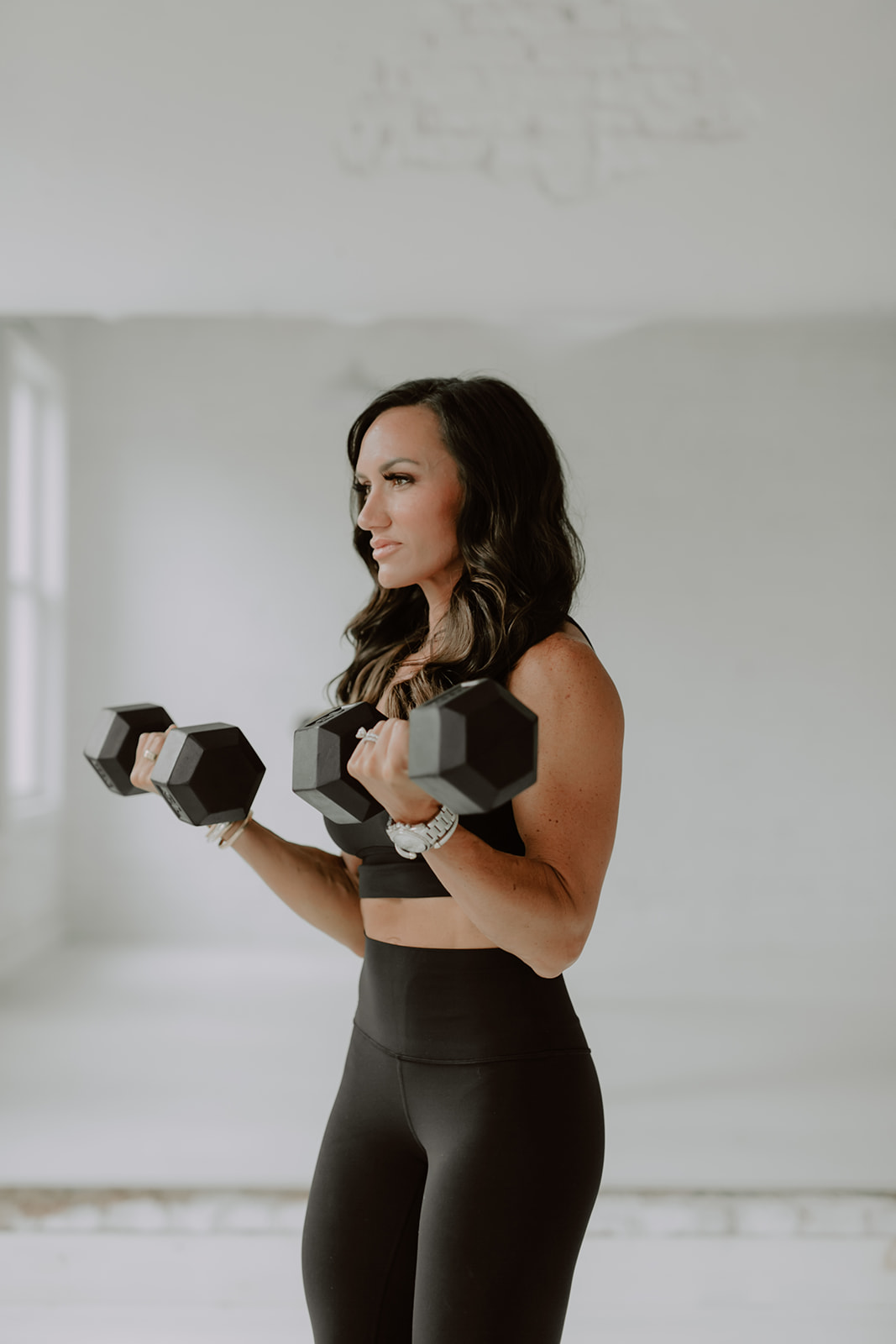
Muscle keeps you strong, soaks up blood sugar, and supports your bones as you age. Regular strength training is linked to a 10 to 20 percent lower risk of dying early from any cause, and perimenopause speeds up muscle loss, so for women over 40, building muscle is one of the most protective habits you can start.
Listen, the scale has never once told you how strong you are, and it can’t tell you what your body will be able to do at 70.
Almost every woman in her 40s who comes to me says some version of the same sentence. “I’m doing everything right and nothing’s working.” She’s eating less, walking more, maybe squeezing in a cardio class a few days a week, and the belly won’t budge while her energy keeps sliding. What she usually isn’t doing is building muscle, and that one piece changes how her body handles food, stress, blood sugar, and getting older.
I want you to start thinking about muscle as the thing that decides how you feel at 60, 70, and 80. Picking up your grandbabies off the floor. Carrying every grocery bag in from the car in one trip (you know you do it). That’s longevity, and muscle is what gets you there.
Why Muscle Matters for Longevity
Muscle is what lets you get up off the floor without grabbing the couch, and the research tying it to a longer life keeps growing.
A 2022 review in the British Journal of Sports Medicine pooled 16 studies and found that 30 to 60 minutes of muscle-strengthening work a week was linked to a 10 to 20 percent lower risk of dying early from any cause, heart disease, and cancer. When people paired strength work with aerobic activity, the drop in all-cause risk was about 40 percent.
Thirty to sixty minutes. A week. That’s two short workouts.
What Perimenopause Does to Your Muscle
Estrogen helps protect muscle, and as it starts dropping in perimenopause, muscle goes with it faster than it did in your 30s. Researchers in Finland followed 234 women from perimenopause into early postmenopause and measured their muscle at every level, from total lean mass down to individual muscle fibers, and lean mass, leg muscle, and thigh muscle size all dropped across the transition. A Danish study pointed out that this speed-up in muscle loss around menopause doesn’t show up in men the same age.
That same Finnish study found the women who stayed physically active held onto more of their muscle.
This is a big part of why the workouts that kept you lean at 32 stopped working at 44. You’re putting in the same effort with less muscle doing the work and a different hormonal environment underneath it all. Menopause changes the conditions, and what you do with your body still counts.
The muscle you build in your 40s is the strength you live on in your 70s.
Muscle, Blood Sugar, and the Belly That Won’t Budge
Every time you eat, your blood sugar rises and insulin moves that sugar out of your blood and into your cells. Dr. Ralph DeFronzo’s research in Diabetes Care shows that when insulin is doing its job, about 80 percent of that glucose is taken up by skeletal muscle. Your muscle is the biggest sponge your body has for blood sugar.
Less muscle means a smaller sponge. More sugar hangs around in your blood, your body releases more insulin to handle it, and higher insulin makes it easier to store fat, especially around your middle. Add rising cortisol from short sleep and a packed calendar, and you’ve got the belly that won’t budge, even when you’re eating less than everyone else at the table.
Building muscle gives that sugar somewhere to go. It’s why I’d rather see you strength training three days a week than adding another hour of cardio.
Your Bones Need Your Muscle Too
Lifting puts load on your bones, and that load is one of the signals that tells your skeleton to stay strong. The LIFTMOR trial in Australia put 101 postmenopausal women with low bone mass through 8 months of twice-weekly, 30-minute supervised strength sessions. Their bone density at the spine and hip improved along with their physical function, and the training was safe for that group under supervision.
These were women in their 60s with osteopenia and osteoporosis, and they got stronger. If you have a bone density diagnosis, talk with your doctor before you start lifting, and ask them about strength training by name.
What My Clients Show Me About Muscle After 40
My client Katy has been in my VIP membership for three and a half years. Her DEXA scan showed she’d lost 14 pounds of fat and gained muscle, with her body fat now in a healthy range. A TSA agent at the airport told her “not to hurt anybody” with those arms, and her flight attendant said she wanted Katy’s arms.
Debbie started with me at 62. Six months later, a body composition scan showed her body fat had gone from 42.1 percent to 30.4 percent, and she said the results far exceeded her expectations, especially at her age.
Sarah, who just celebrated a year with me, said she could tell me everything she lost, but she’d rather talk about what she gained: “strength, positive mindset, knowledge about exercise and nutrition, a supportive coach and community, confidence, energy.”
All three of them built muscle, fed it, and kept showing up on the weeks that weren’t perfect.
How to Start Building Muscle After 40
You don’t need two hours in a gym or a history of lifting to start.
Strength train at least two days a week. The CDC recommends muscle-strengthening activity on 2 or more days a week that works all your major muscle groups: legs, hips, back, abdomen, chest, shoulders, and arms. Squat, hinge, push, pull, and work your core, and 30 minutes is plenty.
Make it a little harder over time. Muscle grows when you ask it to do more than it’s used to, so add a few pounds, add a rep, or slow down the lowering part of each move. The dumbbells that felt heavy in January should feel lighter by March.
Eat protein at every meal. Your muscle can’t rebuild without it, and most women I coach are eating far less than they think. A breakfast of 2 eggs is a start, and on its own it is NOT a high-protein breakfast.
Stop under-eating. A body stuck in a long calorie deficit is in survival mode, and survival mode breaks muscle down for fuel. Eating enough, with your carbs placed around your workouts, gives your body what it needs to build.
Build Muscle That Lasts With My VIP Membership
If you want all of this laid out for you, my VIP membership is open and you can start today. You’ll get customized macros, weekly meal plans, 30-minute workouts you can do at home or in the gym, and daily accountability from me and a group of women in the same season of life. There’s no start date to wait for.
I would love to have you in there with us!
xo, Loren
Frequently Asked Questions
Can women build muscle after 40?
Yes. Muscle responds to strength training at every age, and studies of women in perimenopause and postmenopause show that staying active and lifting helps them keep muscle and bone. My client Debbie started at 62 and saw her body fat drop from 42.1 to 30.4 percent on a body composition scan within six months.
Why do women lose muscle faster in perimenopause?
Estrogen helps protect muscle, and as it declines during perimenopause, muscle loss speeds up. Researchers have found this faster loss around menopause doesn’t happen in men the same age. Women who stay physically active through the transition hold onto more of their muscle.
How often should women over 40 strength train for longevity?
The CDC recommends muscle-strengthening activity at least 2 days a week, working all major muscle groups. A 2022 review in the British Journal of Sports Medicine found the lowest risk of early death at about 30 to 60 minutes of strength work a week.
Is cardio enough for longevity after 40?
Cardio supports your heart, and strength training adds muscle and bone benefits that cardio can’t give you. In a 2022 review of 16 studies, people who combined strength training with aerobic activity had about a 40 percent lower risk of dying early from any cause compared with those who did neither.
Does building muscle help with belly fat in perimenopause?
Muscle takes up about 80 percent of the glucose your body clears when insulin is working, so more muscle helps keep blood sugar and insulin steadier. Steadier insulin makes it easier for your body to let go of stored fat, especially when you pair strength training with enough protein, enough food, and good sleep.
Do I need a gym to build muscle after 40?
No. Dumbbells, resistance bands, and your own body weight are enough to build muscle at home. The workouts in my VIP membership are 30 minutes and can be done at home or in the gym.


LEAVE A COMMENT
Comments