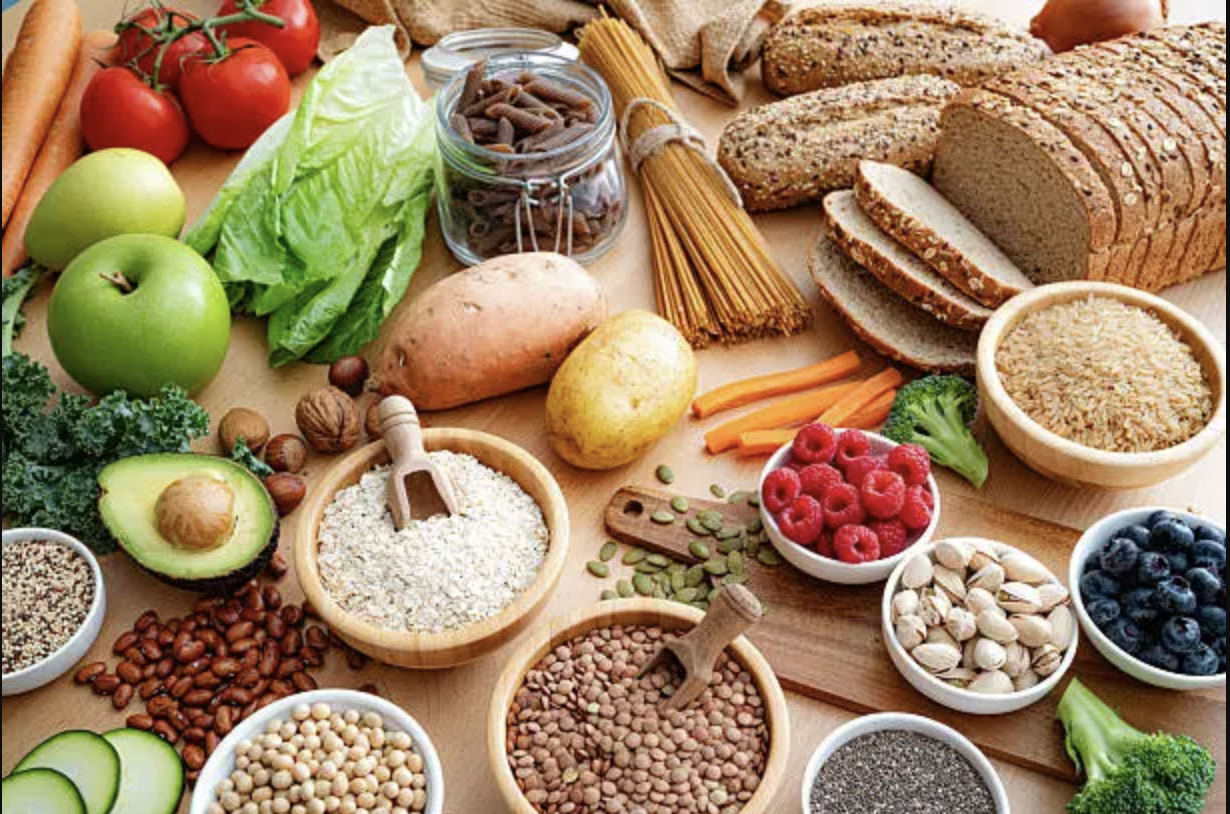
Fiber is not a fat burner. It matters for fat loss because it slows digestion, steadies blood sugar, and keeps you full on less food, which is what makes an eating plan possible to stick to. On its own, fiber moves the scale a little. Paired with enough protein and strength training, it does a lot more.
Listen, fiber is not going to burn your belly fat.
I need to say that first, because the internet has spent the last two years selling fiber like it’s a magic powder that melts inches off your waist, and that is not what fiber does and that is not why I care about it as much as I do. Most of the women I coach are already skeptical of anything that sounds like a miracle, and they should be. They have tried three or four programs in the last five years. They are doing everything right and nothing’s working. The last thing they need is one more thing to track that turns out to be noise.
Fiber matters. It matters less than you’ve been told for fat loss specifically, and it matters far more than you’ve been told for everything else.
What fiber does inside a perimenopausal body
Fiber is the part of a plant your body can’t break down. It doesn’t turn into sugar and it doesn’t get absorbed as calories, it just moves through you, and on the way through it does three things that matter for a woman in her forties.
It slows down how fast food leaves your stomach, so the glucose from your meal enters your bloodstream on a curve instead of a spike. It adds bulk, which is what physically fills you up and keeps you full past the two-hour mark. And it keeps things moving through your gut, which is why the women who fix their fiber usually stop feeling like they’re carrying a bowling ball around by 4pm.
That blood sugar piece is the one that connects to fat loss. When your glucose spikes hard, your insulin comes up hard to clear it, and while insulin is elevated your body is in storage mode rather than burn mode. Then the crash comes and you are standing in the pantry at 3:30 wanting something sweet. That is not a character flaw. That is a blood sugar curve doing exactly what it was set up to do at breakfast.
In perimenopause this gets harder. Estrogen is declining, insulin sensitivity drops for a lot of women, and the same breakfast you ate at 32 doesn’t hold you the way it used to. Same food. Different hormonal environment. Completely different afternoon.
So does fiber matter for fat loss, or not
In a randomized trial published in the Annals of Internal Medicine, researchers took 240 adults with metabolic syndrome and split them in two. One group followed the full American Heart Association diet, thirteen components, calorie limits, fat ratios, the whole thing. The other group got one instruction: eat at least 30 grams of fiber a day. That’s it.
Twelve months later, the fiber-only group had lost about 4.6 pounds. The full AHA group had lost about 6. A year of effort, and the difference between doing one simple thing and doing thirteen complicated things was a pound and a half. Fiber by itself is not the lever, and any account telling you otherwise is selling you something.
But look at what that trial left out. No strength training. No protein target. No meal timing. Fiber alone, against a diet that also didn’t include those things.
What I watch happen in real life is different, because fiber isn’t working alone. My client Amber spent seven years on keto and intermittent fasting, five of those doing one meal a day. She was disciplined, she was active, and she went up and down the same 10 pounds the whole time. When she started eating more food, in a structure, with the fiber and the protein and the carbs all showing up in the same day, she had more energy and less bloating in week one. She lost 12 pounds and moved into the 120s for the first time in years. The fiber didn’t do that. The fiber made the rest of it survivable.
Fiber will not burn the fat. It makes the plan livable, and a plan you can live with is the only kind that keeps working.
The reason I care about this as much as I do
I watched my sister Raina fight stage 4 colon cancer for four years.
I am not going to tell you that fiber would have changed her story. I don’t know that, nobody does, and I am not willing to build a marketing point on top of my sister. But walking that closely with someone who is suffering rearranges what you think is worth your attention, and it moved fiber from a nutrition detail to something I bring up with every client.
A meta-analysis of 25 prospective studies found that each additional 10 grams of daily fiber was associated with roughly 10% lower colorectal cancer risk. Associated with. These are observational studies rather than proof of cause, and the World Cancer Research Fund rates the fiber and colorectal cancer evidence as probable, not convincing. Real finding. Not a guarantee.
The number that matters most here is the screening age. The American Cancer Society’s 2026 report found colorectal cancer incidence rising in adults under 65, with 45% of new cases now in that group, up from 27% in 1995. Screening is recommended starting at 45 for adults at average risk. If you are 45 or older and you have not been screened, that conversation with your doctor matters more than anything I can teach you about food. I am a certified health coach, not a physician, and this is a place where I want you talking to someone with a prescription pad.
Where fiber breaks down for the woman doing everything right
Only 5% of men and 9% of women in the U.S. hit their daily fiber target, according to an American Society for Nutrition analysis of national intake data. Women average around 9.9 grams per 1,000 calories against a recommended 14. For most women, the target lands near 25 grams a day, and the average American is somewhere in the mid-teens.
The women I coach are usually not eating badly. They are eating carefully. When you get serious about protein and nervous about carbs, the first things to leave your plate are beans, oats, fruit, and starchy vegetables, and those are exactly where fiber lives. Coffee, a protein shake, chicken and a salad, a protein bar in the car. It sounds disciplined and it lands around 11 grams.
Then the crash comes at 3pm and she assumes she needs more discipline, when what she needs is a breakfast that holds.
The other place this goes sideways is speed. Going from 11 grams to 35 grams in one Tuesday will make you gassy, bloated, and convinced fiber is not for you. Add roughly 5 grams a week and drink more water while you do it. Fiber pulls water into your gut to do its job, and fiber without water is how you end up more constipated than when you started.
A quick note if you’re on a GLP-1
GLP-1 medications work partly by slowing how fast food leaves your stomach, which is also why constipation shows up so often. A 2025 network meta-analysis found semaglutide and liraglutide were both associated with increased constipation risk compared with placebo. Add in eating meaningfully less food overall, and there’s simply less bulk moving through.
Fiber helps here, and it needs to come in slowly with plenty of water, because a slowed gut plus a sudden fiber load is a rough combination. Talk to your prescriber about what’s right for your dose, especially during escalation.
Getting started with fiber without overhauling your life
You don’t need a new grocery list. You need three or four small swaps inside meals you’re already eating.
Start with breakfast, because breakfast sets the curve. Berries in your yogurt, chia in your smoothie, a slice of sprouted toast alongside your eggs. My client Lauren came in with digestion rated 2 out of 5, no gallbladder, and 15 months of broken postpartum sleep. Within five days of eating in a structure, she could wear her tightest leggings without a stomach ache.
Add about 5 grams a week, not 20 grams overnight. Slow is what keeps you from quitting on day three, and your gut bacteria need time to adjust to the new volume.
Pair fiber with protein at every meal instead of choosing between them. Black beans next to the chicken. An apple with the string cheese. This is the combination that holds you for four hours instead of two.
Track it for one honest week. Most women are shocked by their real number. You can’t fix a gap you haven’t measured, and one week of data tells you more than a year of guessing.
Ready to stop guessing at all of this
Fiber is one piece. Protein is another, strength training is another, and carb cycling around your workouts is what ties them together into something that works with a perimenopausal body instead of against it.
That’s what I coach inside the FASTer Way monthly membership, with new workouts every month, weekly meal guides built around real food, macro tracking that gets customized to you, and me in your corner answering messages. It’s $79 a month, you can cancel anytime, and your satisfaction is guaranteed or your money back.


LEAVE A COMMENT
Comments