Why Cutting Carbs Is Keeping You Stuck (And What to Do Instead)
Carbs have had a rough decade. They have been blamed for belly fat, blamed for sugar cravings, blamed for basically everything that goes sideways when a woman tries to lose weight. So she cuts them. Sometimes almost entirely. And for a few weeks, maybe things move. The scale drops a little. She feels lighter.
And then her energy craters. Her workouts feel terrible. She is irritable by three in the afternoon and standing in front of the pantry at nine at night wondering what happened to her willpower.
What happened is not a willpower failure. What happened is that she removed the fuel her body actually needs to function, and her metabolism responded by slowing down to compensate.
I am not anti-low-carb for everyone, in every situation. But I am very much against cutting carbs indefinitely with no strategy behind it, especially for women in their 30s, 40s, and beyond who are already dealing with shifting hormones, rising cortisol, and a metabolism that is paying very close attention to how much food is coming in.
Carb cycling is a different approach. And it is one of the most effective tools I have ever used with the women inside FASTer Way.
What Carb Cycling Actually Is
Carb cycling is exactly what it sounds like. You eat higher carbohydrates on some days and lower carbohydrates on other days, intentionally matched to what your body is doing that day.
On days when you are doing higher-intensity training, you eat more carbs. Your muscles need glycogen to perform, and giving them that fuel allows you to push harder, lift heavier, and recover faster. On days when you are doing lower-intensity work or resting, you pull carbs back and let your body tap into stored fat for fuel instead.
You are not in a permanent deficit. You are not in a permanent surplus. You are cycling, and that cycling is the key to everything.
It sounds simple because it is. The application takes a little learning, but the concept is not complicated: give your body more fuel when it needs more, and less when it needs less.
Why Your Metabolism Responds Differently to Cycling Than to Cutting
Here is the problem with low-carb all the time. Your body is smart. When you take carbohydrates away consistently, your body registers the drop in fuel availability and starts adapting. Your thyroid function can slow. Your leptin levels drop. Leptin is the hormone that tells your brain you are satisfied, and when it drops, hunger goes up and the urge to overeat becomes harder to manage.
Your metabolism also downshifts to match your intake. This is called metabolic adaptation, and it is the reason that woman who was eating twelve hundred calories a day for three months stopped losing weight even though she is eating almost nothing. Her body adjusted to the intake. It is now burning fewer calories at rest to protect her from what it perceives as a shortage.
Carb cycling prevents this adaptation by keeping your body guessing. When you cycle between higher and lower carbohydrate days, your metabolism cannot fully adapt to either state. It stays responsive. It keeps burning efficiently because it never gets the sustained signal that food is scarce.
This is also why women inside FASTer Way often eat more food than they have eaten in years and still lose fat. Not despite eating more. Because of it.
What Happens Hormonally When You Cycle Your Carbs
This piece matters a lot for women over 35, so I want to spend some time here.
Carbohydrates are not just fuel. They play a direct role in hormone production and regulation. Your thyroid needs adequate carbohydrates to convert T4 into the active T3 hormone your body actually uses. When you go very low carb for extended periods, T3 levels can drop, and your metabolism slows as a result. This is especially relevant if you already have thyroid concerns.
Carbohydrates also support the production of serotonin, the neurotransmitter that regulates mood, sleep, and cravings. Women who go very low carb often report feeling flat, irritable, and plagued by intense sugar cravings. That is not weakness. That is a neurochemical response to a deficit in the nutrients your brain needs.
On the cortisol side, low-carb diets can actually raise cortisol levels because your body reads the carbohydrate shortage as a stress signal. Elevated cortisol makes it harder to burn belly fat specifically, because cortisol drives fat storage in the abdominal area. So the woman who cut carbs to lose belly fat may actually be making the cortisol situation worse, not better.
Higher-carb days, strategically placed, bring cortisol back down after intense training. They support hormone production. They refill glycogen stores in the muscles. They give your body the signal that food is available and it is safe to keep the metabolism running at full output.
How the Carb Cycle Works Inside FASTer Way
Inside my program, carb cycling is built around your workout schedule. Here is a simplified version of how the days break down:
On high-intensity training days, you eat higher carbohydrates. These are the days when you are strength training or doing workouts that push your heart rate and demand real energy output. Your body uses those carbs to fuel the session and to recover afterward. Eating higher carbs after hard training also helps lower cortisol, which brings your body out of the stress response and into a rebuilding state.
On low-intensity days or rest days, you eat lower carbohydrates. Fat intake typically goes up slightly on these days to replace the energy carbs would have provided. Your body, without a high demand for glycogen, is much more efficient at burning stored fat for fuel on these days. You are essentially training it to use fat as its primary energy source when intensity is low.
The result is a week where some days your body is fueled up and performing, and other days it is in a fat-burning state, and neither state goes on long enough for your metabolism to adapt to it.
Your macros on each day type are specific to you. Your body weight, activity level, muscle mass, and goals all factor in. This is not a one-size-fits-all template. The numbers matter, which is why inside FASTer Way every client gets custom macros rather than following a generic plan.
What You Eat on Each Day Type
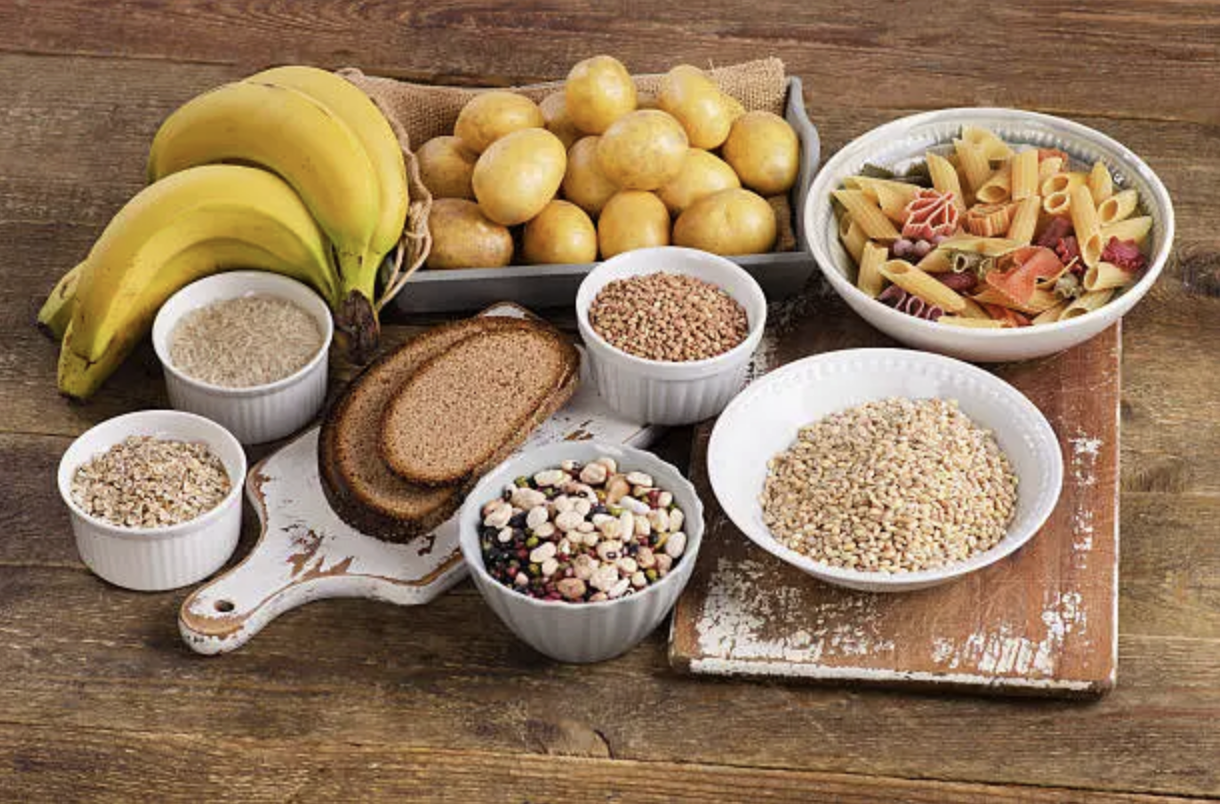
Higher-carb days look like meals built around quality carbohydrate sources: rice, sweet potatoes, oats, fruit, quinoa, beans. Protein stays high every single day. Fat is slightly lower on high-carb days because you are getting your energy primarily from carbohydrates, and stacking high fat on top of high carbs in the same day tends to promote fat storage rather than fat burning.
Lower-carb days look like meals centered on protein and healthy fats: eggs, avocado, meat, fish, nuts, non-starchy vegetables, olive oil. Carbs are not eliminated. They are simply kept lower, usually coming from vegetables and small amounts of fruit rather than grains or starches.
On both day types, protein is the anchor. High protein protects muscle tissue, keeps you feeling full, and requires more energy for your body to digest and process than fat or carbohydrates do. If there is one thing I want every woman reading this to hear, it is that protein is non-negotiable. You cannot carb cycle your way to a better body if your protein is too low.
Carb Cycling and the Scale
I want to address this because it trips women up. When you eat more carbohydrates on high-carb days, you will often see the scale go up the next morning. Sometimes by a pound or two. This is not fat gain. Carbohydrates are stored in your muscles and liver as glycogen, and glycogen holds onto water. More carbs in means more glycogen stored means more water weight sitting in the scale reading.
This is a good thing. It means your muscles are fueled and ready to work. It does not mean you gained fat overnight.
Women who are used to watching the scale every morning can find this disorienting at first. I always tell my clients to zoom out. Look at the trend over a week, not day to day. The day after a high-carb day the scale might be up. The day after a low-carb day it might be down. Over the course of a week, the trend should be moving in the right direction as body composition changes and fat starts to come off.
The scale is also a limited tool for measuring progress when you are strength training alongside carb cycling. You may lose inches and go down a full clothing size without the scale moving much, because you are building muscle while losing fat simultaneously. Body measurements, progress photos, and how your clothes fit are often more accurate reflections of what is actually happening than the number you step on every morning.
The Big Mistake Women Make With Carb Cycling
The most common mistake I see is treating low-carb days like a punishment and piling restriction on top of restriction. Going extremely low on carbs and also extremely low on fat on the same day, eating barely anything, trying to turn a low-carb day into a fast. That is not carb cycling. That is a crash diet with extra steps, and your body will respond accordingly.
Low-carb days are not starvation days. They are strategic fat-burning days. You should still feel satisfied. You should still have energy. You should still be eating enough food to support your body. The difference is where that food comes from, not how little of it there is.
The other mistake is giving up on high-carb days out of fear. I work with so many women who have been told carbs are the enemy for so long that eating a full serving of rice or a sweet potato feels like breaking the rules. It is not breaking the rules. It is following them. Your body needs those carbs on hard training days to perform, recover, build muscle, and keep your hormones functioning properly.
Trust the process. The cycle is the point.
Who Carb Cycling Is Especially Good For
Carb cycling works well for most women, but there are a few situations where it tends to produce particularly dramatic results.
Women who have been in a long-term calorie deficit and hit a plateau often see things break loose quickly once they start cycling. The variation in fuel intake is exactly the pattern disruption a stuck metabolism needs.
Women with thyroid concerns tend to respond well because of the support carb cycling provides to T3 conversion. They are eating enough carbs on high days to keep thyroid function supported, and cycling the low days in between rather than living there permanently.
Women who have historically lost weight only to regain it often find that carb cycling teaches them a relationship with food that is sustainable long term. There are no forbidden foods. There is no wagon to fall off. There are just different kinds of days, and you learn to navigate both without guilt or rigidity.
And women who are strength training, which I recommend to everyone, see the most noticeable body composition changes when their nutrition is matched to their training the way carb cycling allows. You cannot build muscle effectively in a chronic deficit. Carb cycling gives you the strategic fuel to build while still creating the conditions for fat loss.
This Is Why I Built FASTer Way Around It
I have been coaching women through this program since 2017. I have a background in nutrition and I was a college athlete, which means I understand both the science and the reality of what it takes to fuel a body well. What I have watched carb cycling do for thousands of women in my community is genuinely remarkable.
Not because it is magic. Because it is the first strategy that finally works with a woman’s body instead of against it. It respects the hormonal complexity of what is happening in her 30s, 40s, and beyond. It does not ask her to suffer through restriction indefinitely. And it produces the kind of results that actually stick, because the approach is built on sustainable habits, not unsustainable deprivation.
If you are ready to stop cutting carbs and start cycling them, my next FASTer Way round is coming up soon. Inside the program, you will get your custom macros, your high and low carb day breakdown matched to your specific workout schedule, and six weeks of coaching to help you understand what your body is doing and why.
Click here to grab your spot! Your body has been waiting for this.


LEAVE A COMMENT
Comments